

Indonesia Takes Steps Toward Establishing National Super Pollutant Unit by 2027
Government-led initiative aims to accelerate action on super pollutants to improve air quality and strengthen coordination across key sectors.
-
Indonesia is taking steps toward establishing a National Super Pollutant Unit by 2027, strengthening coordination across government to accelerate action on super pollutants.
-
The proposed unit will support coordinated action across key sectors, including waste, agriculture, energy, transport, and cooling, while strengthening implementation of Indonesia’s national climate commitments.
-
Tackling super pollutants can help slow global warming in the near term, improve air quality, and protect public health, delivering tangible benefits for communities across Indonesia.
Jakarta, 6 Oktober 2026 – Indonesia is taking steps to strengthen its response to some of the most powerful drivers of climate change and air pollution, with plans to establish a dedicated national Super Pollutant Unit by 2027.
Led by the Ministry of Environment/Environmental Protection Agency (MoE/EPA), the initiative aims to accelerate reductions in super pollutants, including methane, black carbon and hydrofluorocarbons, while delivering benefits for air quality, public health and the climate.
The ministry convened an inaugural meeting with government ministries and technical agencies to begin shaping the unit's mandate, priorities and implementation arrangements.
While carbon dioxide remains central to climate action, tackling super pollutants offers an important opportunity to slow warming in the near term and tackle air pollution. Many of these pollutants remain in the atmosphere for much shorter periods than carbon dioxide, making rapid reductions particularly valuable.
"Addressing super pollutants in Indonesia has become critical today because these pollutants have had a direct impact on public health over the past decade. Moreover, given that Indonesia has set an absolute emissions cap in its second Nationally Determined Contribution (NDC), rapid and measurable implementation of mitigation actions is required," said Rosa Vivien Ratnawati, Secretary of MoE/EPA.
Turning national climate ambition into coordinated action
Super pollutants are emitted across several major sectors of Indonesia's economy, including waste management, agriculture, transport, energy, industry, and cooling and refrigeration.
Although efforts to address these emissions are already underway, implementation remains fragmented across institutions and sectors. Limited dedicated funding and the absence of a unified coordination mechanism have also constrained progress.
The proposed Super Pollutant Unit is intended to help overcome these challenges by strengthening coordination across government, identifying priority mitigation opportunities, supporting the integration of super pollutants into national climate commitments and sectoral policies, and helping provincial and city governments advance practical solutions.
The inaugural meeting marked an initial step in this process, bringing together relevant ministries and agencies to review existing initiatives, assess available data and identify priorities for future action.
Indonesia joins international effort to accelerate super pollutant reductions
The planned unit is part of the Super Pollutant Country Action Accelerator, launched by the Climate and Clean Air Coalition (CCAC) at COP30 in Belém, Brazil, in 2025.
Indonesia is among seven countries participating in the programme's first cohort, alongside Brazil, Cambodia, Kazakhstan, Mexico, Nigeria and South Africa.
The programme supports countries in strengthening national capacity and translating commitments into sustained, country-led reductions in super pollutant emissions.
“The Super Pollutant Unit is not to create a parallel structure or a temporary project. It is to strengthen Indonesia’s own capacity to identify priorities, coordinate action across government, mobilize resources and build a pipeline of implementation that can continue over the long term. The CCAC is very proud to be supporting Indonesia in this effort. We see this as a long-term partnership, built around Indonesia’s priorities and Indonesia’s leadership,” said Martina Otto, Head of the CCAC Secretariat.
The unit is planned to operate under KLH/BPLH, with administrative support from World Resources Institute (WRI) Indonesia and support through the CCAC initiative.
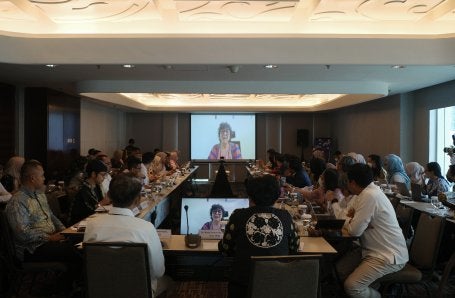
Credit: WRI Indonesia.
Delivering benefits for climate and communities
Reducing super pollutants can help slow near-term warming while addressing sources of harmful air pollution. For Indonesia, stronger action across sectors also offers an opportunity to improve public health and support sustainable economic development.
“With this planned technical unit, we hope Indonesia's efforts to reduce a number of critical pollutants will become increasingly significant in slowing the pace of climate change that affects communities,” said Arief Wijaya, Managing Director of WRI Indonesia.
The next phase of planning will focus on defining the unit's scope, building on existing government initiatives and identifying the steps needed to move toward its proposed establishment in 2027.
Through this effort, Indonesia aims to strengthen its capacity to deliver coordinated, measurable action on super pollutants—complementing its broader climate commitments while protecting the health and well-being of its people.[]
***
Supporting Documents:
Download the event documentation via the following link.
Notes to Editors:
About WRI Indonesia
World Resources Institute (WRI) Indonesia is an independent research institution that advances inclusive and sustainable national socio-economic development. Working in partnership with leaders in government, business, and civil society, WRI Indonesia researches, designs, and implements practical solutions that simultaneously improve people's lives and ensure nature can thrive. Read more via the following link.
About the Climate and Clean Air Coalition (CCAC)
Initiated by the United Nations Environment Programme (UNEP), the Climate and Clean Air Coalition (CCAC) is a partnership of more than 160 governments, intergovernmental organizations, and non-governmental organizations. The Coalition works to reduce emissions of high-impact short-lived climate pollutants (super pollutants) — methane, black carbon, hydrofluorocarbons, and tropospheric ozone — which drive both climate change and air pollution. The CCAC aims to connect ambitious agenda-setting with targeted mitigation action at the country and sector levels. Backed by its Trust Fund and grounded in robust knowledge and analysis, the CCAC has generated high-level political commitment, delivered direct country-level support, and developed a range of tools that help strengthen the case for action while supporting implementation.
For further information, please contact:
Bunga Karnisa, Senior Lead for Marine Plastic Pollution & Circular Economy Partnership
Haris Prabowo, Communications Officer for Marine Pollution and Waste
