

Featured WRI Experts:
Can Southeast Asia Achieve a Fire-Free El Niño Season? Part 2 - Learning from the Past, Preparing for the Future

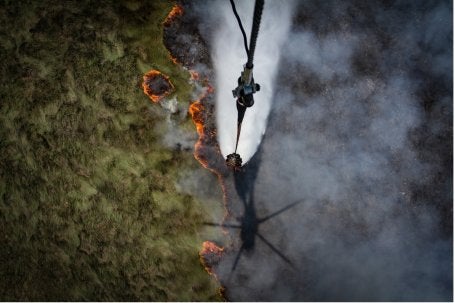
Image by
Ahmad Faiz Zainuddin/People for Peat
Eleven nations, one goal: a haze-free ASEAN by 2030. Southeast Asia does not need to start from the scratch. The region has accumulated decade of experience, from regional cooperation and corporate commitments to community-based fire prevention and satellite monitoring. The challenge now is to connect these efforts more effectively and translate information and commitments into action before fires start. As El Niño approaches (See Part I), this is an opportunity to set clearer ambition: can the region move from managing fires to preventing them, and ultimately toward a fire-free El Niño season?
Turning two decades of regional cooperation into stronger action
Over the past two decades, ASEAN countries have strengthened regional cooperation, national policies, and private sector commitments to reduce fire and haze risks. The ASEAN Agreement on Transboundary Haze Pollution (AATHP), signed in 2002 in response to the recurring transboundary haze episodes, established the first legally binding regional framework for addressing transboundary haze caused by forest and land fires. Since then, it has become a key mechanism for regional cooperation, encouraging information sharing, technical cooperation, early warning, coordinated responses to major fire events. Importantly, the Agreement also helped establish a shared understanding that transboundary haze is a regional challenge that requires collective action rather than isolated national responses.
However, the effectiveness of the Agreement has been constrained by several structural and institutional challenges. First, the absence of a dedicated regional institution with the authority to monitor compliance and coordinate implementation has limited enforcement and accountability. Second, bilateral political sensitivities have at times hindered timely and coordinated responses to transboundary haze events. Third, uneven national legislation and inconsistent enforcement have reduced the effectiveness of regional commitments. Furthermore, conflicting interests among governments, plantation companies, and local communities have complicated implementation.
The Second Roadmap for ASEAN Cooperation on Transboundary Haze Pollution Control 2023–2030 was developed to strengthen the implementation of the AATHP and support ASEAN countries in achieving a transboundary haze-free ASEAN by 2030. The roadmap includes several strategies, including fire prevention, sustainable management of agricultural land, forests and peatlands, stronger policies and enforcement, and better regional coordination. It also introduces several indicators and targets to measure whether progress is actually being made.
One of the main targets is to achieve a significant and sustained reduction in haze pollution episodes by 2030. The roadmap also includes a target for ASEAN countries to achieve their national PM2.5 air quality targets, with a view toward meeting the WHO annual and 24-hour Interim Target 3 for PM2.5. This is relevant because the impacts of forest and land fires are not limited to the areas where the fires happen. In this context, the inclusion of PM2.5 in the roadmap provides a more direct way to connect the fire and haze risks discussed earlier with their impacts on air quality. Recent data show some progress, particularly in Cambodia and the Philippines, while both assessed cities in Brunei Darussalam met WHO IT-4 (10 µg/m³). However, with El Niño conditions already present in 2026 and expected to strengthen, the roadmap's targets also provide a basis for assessing whether stronger prevention and regional cooperation are actually reducing the impacts of transboundary haze.
From commitments to action: the private sector’s role in preventing fires
The private agricultural sector plays a significant role in fire prevention and management, given the substantial contribution of agricultural commodities to GDP. Palm oil is particularly important, with Indonesia, Malaysia, and Thailand together supplying 86% of global demand. Previous studies have shown that although agricultural plantations do not directly trigger fires, permanent agriculture is often the end product of land clearing and fires. However, forest fires contributed to approximately 25% of deforestation from 1990 to 2020, and the affected areas often remained unused or unrestored for approximately five years.
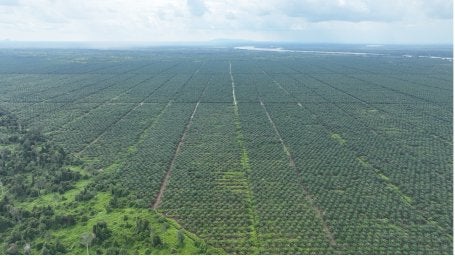
The ASEAN Food, Agriculture and Forestry Sectoral Plan identifies decarbonisation and climate resilient in agriculture as one of its six strategic priorities, with recommended actions include strengthening knowledge-sharing mechanisms and developing integrated forest fire management approaches that engage stakeholders across all levels of the sector’s supply chain. The Roundtable on Sustainable Palm Oil (RSPO) establishes strict land management requirements to ensure that certified production does not contribute to fire occurrence or deforestation. Similar requirements also apply to independent smallholders to ensure that the certification scheme addresses sustainability practices across the entire supply chain. However, the effects of RSPO certification on deforestation and fire incidence remain unclear, since RSPO-certified companies generally operate in areas with relatively limited potential for forest clearing and fire occurrence.
No Deforestation, No Peat, No Exploitation (NDPE) is a voluntary mechanism through which companies in the palm oil sector implement commitments to prevent deforestation, peatland degradation, and exploitation. Companies seeking to declare and demonstrate compliance with their NDPE commitments are required to provide evidence of the implementation of measures such as zero-burning practices, fire monitoring and prevention, and drainage management in peatland areas. Efforts to address commodity-driven fires are also being pursued through regulatory mechanisms.
Malaysia and Indonesia promote sustainable palm oil through certification scemes. In Malaysia, compliance with the Malaysian Sustainable Palm Oil (MSPO) standard has been required for operating licenses since 2020, including zero-burning practices and fire prevention measures. in Indonesia, the Indonesian Sustainable Palm Oil (ISPO) standard, introduced in 2009, was strengthened by Presidential Regulation No. 16 of 2025, which mandates compliance for all palm oil companies.
Despite these commitments and initiatives, translating them into effective fire prevention remains challenging due to complex and fragmented supply chains, uneven implementation, monitoring and enforcement, and the need for coordinated action across companies, smallholders, communities, and government agencies. Limited and declining public-sector resources may further constrain sustained investment in fire prevention, preparedness, and response.
Communities are the first line of defence
Local communities are often the first to detect, prevent, and respond to fires. Empowering these communities through knowledge resources, and sustained support is therefore central to building resilience against El Niño. Community-based initiatives, implemented by government (e.g., Fire Care Community/MPA and Disaster Resilient Village/Destana) in Indonesia, and similar programmes across ASEAN have demonstrated the importance of local participation in reducing fire risk and strengthening landscape resilience. The Fire Free Village (FFV) Program, implemented by APRIL in Riau, provides an important example of how village-level incentives can contribute to reducing fire incidence by combining financial rewards with community engagement, awareness raising, law-enforcement information, and support for alternative livelihoods.
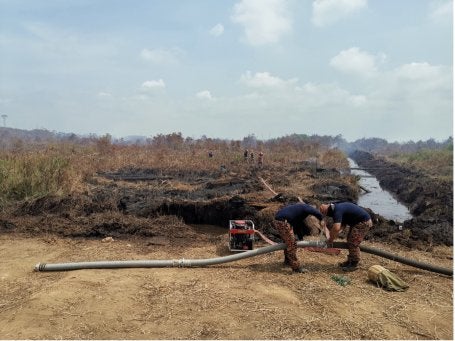
Sustained awareness and access to practical knowledge are essential to ensuring that prevention measures are understood and maintained over time. WRI Indonesia has supported this through awareness-raising and capacity-building initiatives on sustainable land management and fire prevention, including the EU SUPA (Sustainable Use of Peatland and Haze Mitigation in ASEAN) project which was implemented in eight Southeast Asian Countries by involving more than 1500 local communities and the Smallholder Hub.
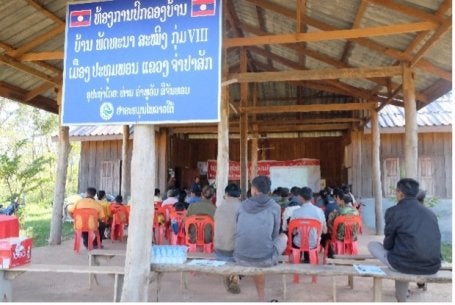
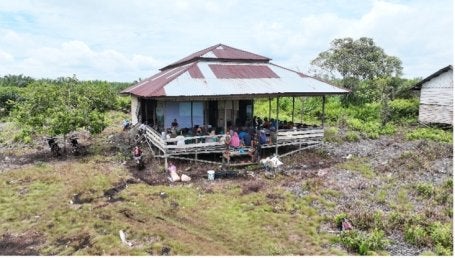
Despite the numerous community-based initiatives implemented across ASEAN countries, these efforts face similar challenges, including reliance on project-based or external funding, limited technical and institutional capacity, difficulties in sustaining long-term community participation, fragmented coordination among responsible agencies, and inadequate monitoring of implementation outcomes.
Toward a fire-free El Niño season
Achieving a fire-free El Niño season will require each actor to move from broad commitments toward specific and measurable actions.
• Governments should strengthen enforcement, preparedness plans, emergency response capacity, and coordination across administrative and national binderies. The focus should continue shifting from reactive fire suppression to proactive risk prevention, while also strengthening preparedness for potential air quality deterioration. This also requires adequate and sustained funding for prevention, preparedness, and firefighting capacity, including at the local level.
• The private sector should translate fire-prevention commitments into operational measures, including preparedness target, land management, and rapid response protocols. Companies should set measurable preparedness target, such as conducting regular patrols and fire-risk assessments, ensuring firefighting equipment and trained personnel are in place before the dry season, and establishing clear response-time targets for fire alerts. Companies should also work with local governments and communities to coordinate prevention and early response efforts.
• Smallholder farmers and local communities should be supported to adopt practical and measurable fire-prevention measures, including avoiding the use of fire for land preparation, participating in early-warning and fire monitoring systems, and promptly reporting fire incidents. Local governments and companies can support these efforts through technical assistance, community-based fire prevention programmes, access to equipment and response resources, and mechanism for coordinating smallholders’ and local communities’ action with broader landscape-level fire management.
In addition, fire-related data (including fire alerts, PM2.5 monitoring, and other supporting data) from these different sources and actors should also be incorporated into and made more accessible through the ASEAN Transboundary Haze Monitoring Dashboard. This shared information can help strengthen transparency and accountability by enabling stakeholders to track preparedness, air quality response, and emergency response more effectively across countries.
The goal should be more than simply reducing the number of fire alerts during an El Niño season. A shared ambition for a fire-free El Niño season should be translated into measurable preparedness targets, clear responsibilities, and transparent monitoring of progress. The experience of 2026 can then provide a basis for identifying what works, addressing remaining gaps, and strengthening preparedness before the next El Niño season.
