Explore more:
COP
Press Release
National Dialogue Highlights Sectoral Implementation Ahead of COP31 UNFCCC and COP17 CBD
Jakarta, 16 September 2026 – Ahead of the annual UN climate negotiations, COP31 of the United Nations Framework Convention on Climate Change (UNFCCC), and the Convention on Biological Diversity (CBD) COP17, the International Climate Initiative (IKI) Hub Indonesia, in collaboration with the Deutsche Gesellschaft für Internationale Zusammenarbeit (GIZ) and World Resources Institute (WRI) Indonesia, and with the support of the German Embassy in Jakarta, convened a national dialogue titled “From Negotiation to Implementation: Strengthening Informed Climate and Biodiversity Diplomacy Ahead of COP31 and COP17.”
The dialogue provided a platform for strategic exchange, negotiation preparation and technical knowledge-sharing among Indonesian negotiators, experts and international partners. It also reflected the strengthening cooperation between Indonesia and Germany on climate and biodiversity. The dialogue sought to connect climate and biodiversity negotiation priorities with technical evidence and implementation experience, strengthening Indonesia’s engagement in international processes.
Growing geopolitical tensions, slowing economic growth and climate-related disasters are increasing vulnerabilities for communities. At the same time, the international climate and biodiversity agendas are entering a critical phase, with both processes increasingly focused on translating existing commitments into implementation.
Two decades after the adoption of the Paris Agreement, 147 countries have submitted their climate targets through Nationally Determined Contributions (NDCs). The challenge now lies in translating these commitments into policies, financing, investment and action. A similar challenge faces the biodiversity agenda ahead of COP17 CBD, as countries work to accelerate implementation of the Kunming–Montreal Global Biodiversity Framework (KMGBF) and achieve its 2030 targets.
As the global geopolitical landscape increasingly prioritises national interests and domestic economic protection, the space and momentum for collective action are becoming more constrained. In this context, COP31 and COP17 present both opportunities and challenges for Indonesia to strengthen its national interests and role in global cooperation, while building stronger collaboration to ensure climate and biodiversity commitments are translated into domestic action.
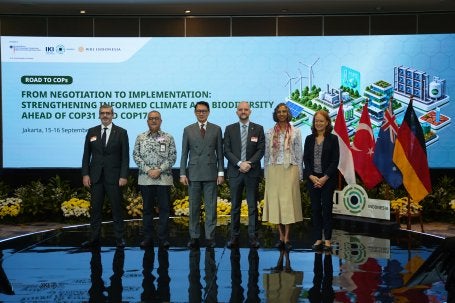
Arif Havas Oegroseno, Vice Minister of Foreign Affairs of the Republic of Indonesia, said, “Indonesia’s climate and biodiversity commitments are currently marked by a range of developments, including emissions reduction targets, carbon market mechanisms, forest protection, peatland restoration and marine conservation. Indonesia has credibility, a shared distribution of responsibility with the global community in the forestry sector, and leadership in marine protection. Innovative and integrated financing frameworks are essential to achieving Indonesia’s climate and biodiversity conservation targets.”
Indonesia submitted its Second NDC ahead of COP30 last year. Translating this commitment into implementation requires greater alignment between climate and economic growth agendas and sectoral policies at both national and subnational levels. Adequate financing must support this alignment and the implementation of climate actions and sectoral policies.
The Government of Indonesia estimates that US$472.6 billion in investment will be required to achieve the climate targets set out in the Second NDC. This estimate may still fall short of the country’s actual financing needs, making the mobilisation of climate finance increasingly important to support effective and sustained implementation of climate action in Indonesia.
Ary Sudjianto, Deputy for Climate Change Control and Carbon Economic Value Governance at the Ministry of Environment/BPLH, emphasised, “Climate change-related disasters have affected our communities, ecosystems and environment. We need to translate our climate commitments into concrete action. The Government of Indonesia is using COP31 as an opportunity to prioritise mitigation, adaptation and climate finance as key areas of climate action.”
Elisabeth Taher, Head of Climate and Environment at the German Embassy in Indonesia, said, “This year’s conference must move from ambition to action. This means we need to see genuine political will following the negotiation process. Only an ambitious legislative framework can create the enabling environment needed for private-sector investment.”
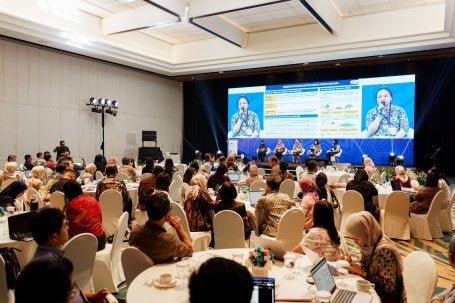
WRI Indonesia and IKI Hub Indonesia also support data-driven research to inform evidence-based and measurable policy responses to reduce emissions through cross-sectoral approaches. Supporting low-carbon policy through the development of enabling ecosystems, including supportive regulations and meaningful stakeholder engagement involving businesses and communities, is an important element of WRI’s work to support the Government of Indonesia.
The collaboration between WRI Indonesia and IKI Hub Indonesia has supported Indonesia’s low-carbon development agenda through evidence-based research and policy recommendations. The collaboration helps strengthen policies and development planning that integrate emissions-reduction targets with sustainable, climate-resilient economic development.
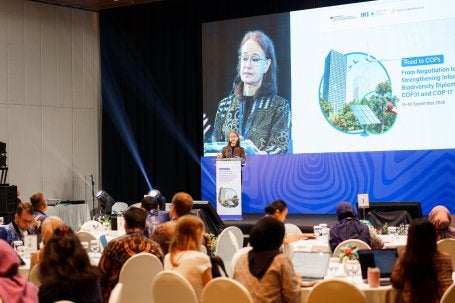
Karin Allgoewer, Program Manager for IKI Hub, added, “This dialogue is expected to provide a comprehensive perspective, from negotiations to technical knowledge, on climate action and biodiversity protection that can inform Indonesia’s climate negotiations. Dialogues such as this are particularly important in bridging highly technical considerations with more fundamental questions about the essence, values and objectives of climate action itself. Such discussions can provide substantive considerations for the stakeholders involved and those affected by climate and biodiversity policies.”
During the technical discussions, WRI Indonesia shared ongoing research on methane emissions reduction in the solid waste and wastewater sectors, strategies for mobilising climate finance through investable actions, and efforts to strengthen Indonesia’s position on coordinated, credible and internationally recognised ESG governance in the minerals sector. The technical discussions generated feedback from strategic partners across government, research institutions, the private sector and expert communities.
Arief Wijaya, Managing Director of WRI Indonesia, said, “Through our research, experience and lessons learned, WRI Indonesia supports low-carbon development and strengthens national climate resilience by fostering enabling ecosystems through regulation, while generating recommendations that can strengthen Indonesia’s position and climate diplomacy in international negotiations.”
About IKI Hub Indonesia
IKI Hub Indonesia is the Climate and Biodiversity Hub Indonesia initiative, implemented by GIZ Indonesia and ASEAN to support the implementation of International Climate Initiative (IKI) projects in Indonesia. As one of IKI’s priority countries, Indonesia hosts 46 ongoing IKI projects as of August 2026, comprising 27 mitigation projects, three adaptation projects, three natural carbon sink projects and 13 biodiversity projects.
The initiative is supported by the German Federal Ministry for the Environment, Climate Action, Nature Conservation and Nuclear Safety (BMUKN), together with a range of Indonesian government partners, to strengthen the coordination and implementation of climate and biodiversity action in Indonesia. Visit https://iki-indonesia.id
About WRI Indonesia
WRI Indonesia was established in Indonesia as Yayasan Institut Sumber Daya Dunia. WRI Indonesia is an independent research organisation dedicated to contributing to inclusive and sustainable socio-economic development in Indonesia. Our work focuses on five portfolios: forests, climate, energy, cities and transport, and oceans.
We turn big ideas into action at the intersection of environmental sustainability, economic opportunity and human well-being. Visit https://wri-indonesia.org/id
Media Contacts:
Saputra Gandabhaskara, Lead Communication Unit for Resilience Nature Cooperation Area Deutsche Gesellschaft für Internationale Zusammenarbeit (GIZ) GmbH, [email protected]
Enggi Dewanti, Senior Communications Specialist for Climate Transition, WRI Indonesia, [email protected]