Explore more:
bisnis berkelanjutan
Building on the Baseline: Leveraging Indonesian Regulations to Achieve International ESG Conformance

Environmental, Social, and Governance (ESG) principles and implementation.
Environmental, Social, and Governance (ESG) principles have evolved from a voluntary consideration into a critical determinant of market access, investment flows, and long-term competitiveness. Companies that demonstrate robust ESG governance are better positioned to attract investment, access capital on favourable terms, mitigate operational and reputational risks, and maintain access to increasingly sustainability-conscious markets. Conversely, inadequate ESG performance can lead to restricted financing opportunities, supply chain exclusion, and reduced competitiveness, regardless of resource quality.
Indonesia has solid rules in place for ESG-related issues, but significant gaps remain between national regulations and international ESG standards. WRI Indonesia has been supporting the Coordinating Ministry of Economic Affairs, together with the National Economic Council for Indonesian’s ESG gap analysis study to address the demand for ESG risk management and transparency. The approach will be timely in supporting companies, especially in the critical mineral sector, where holding a national permit is no longer sufficient to meet global market demands, leaving a gap they must fill.
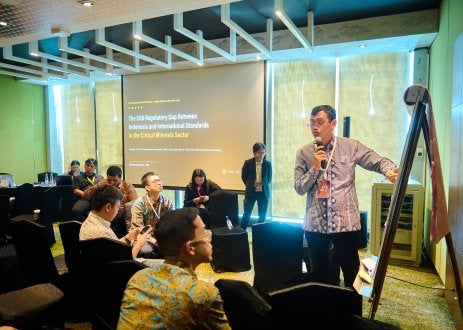
The Coordinating Ministry of Economic Affairs and the National Economic Council.
To put these findings to work, WRI Indonesia and Shanghai Metals Market (SMM) brought together ESG and sustainability leads from critical mineral companies, along with industry experts and government representatives, for a half-day workshop in Jakarta. The workshop was designed to familiarize companies with selected findings from the ESG regulatory gap analysis through practical tool demonstrations and exercises, ahead of the official handover of the report to the relevant ministries. The workshop was held as a side event of the Indonesia Critical Minerals Conference and Expo 2026 (ICM 2026) on June 5th, 2026.
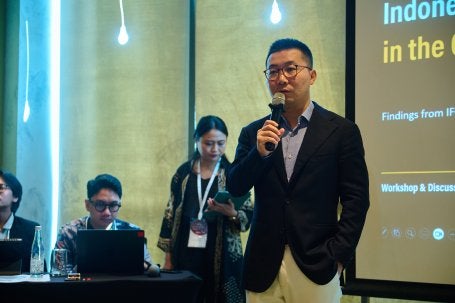
Mr. Logan Lu, the CEO from Shanghai Metal Markets, said in his opening speech, “In today’s context, we are seeing geopolitical tensions like never before. With a platform like this side event, we hope to create a space that enlightens and sparks closer communication among more people and industry players from different sectors and countries.”
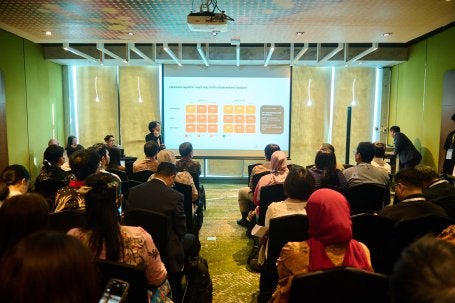
The workshop brought together around 40 participants from critical mineral companies, experts, and Civil Society Organizations (CSOs). Participants include representatives from PT ANTAM Tbk, Huayou Indonesia, PT Vale Indonesia Tbk, Harita Nickel, PT Freeport, Indonesia Battery Corporation (IBC), Eramet Indonesia, Nexus3 Foundation, Organisation for Economic Co-operation and Development (OECD), Institute for Development of Economics and Finance (INDEF), and other relevant stakeholders.
The workshop was built around four case studies from a single fictional nickel company, covering waste management, biodiversity, land acquisition, and indigenous peoples. Regarding waste management, for instance, Indonesian regulations already address the issue comprehensively, with only a small remaining gap, primarily related to the Global Industry Standard on Tailings Management (GISTM)-level of tailings governance. Participants highlighted the action plan for emergency responses, which companies identified as a barrier.
In biodiversity, the study emphasis how AMDAL has provided a general baseline, requiring companies to voluntarily layer on a Critical Habitat Assessment and a no-net-loss commitment. The participants stressed the importance of strong organizational capacity and companies’ long-term perspective in adhering to the standards.
For land acquisition, the Law 2/2012 addressed only physical-asset compensation, leaving the bulk of what international standards require, including Land Acquisition and Resettlement Action Plan (LARAP) livelihood restoration, and post-resettlement monitoring, to be built from scratch. The participants agreed that companies need to understand two distinct aspects of land acquisition: regulations and their social aspect.
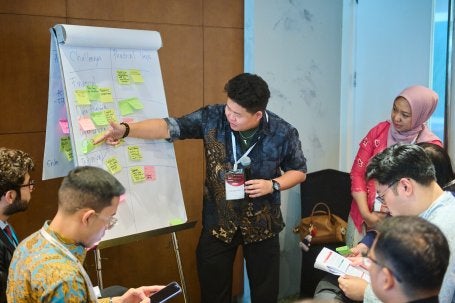
Meanwhile, for Indigenous peoples, the study highlights a gap in existing regulations: substantive protection from FPIC to benefit-sharing was entirely unaddressed, leaving it to the company to design. Participants also added the insufficient knowledge of the Indigenous People criteria, given the complexities of Indonesia as an archipelagic country.
These four cases showed participants that adhering to international ESG standards will require companies to assess and measure gaps in existing regulations.
The goal of this workshop is to move beyond treating national rules and global standards as two separate, exhausting hurdles. The previous study findings and discussions with the workshop participants show that by mapping national regulations directly against international benchmarks, companies can find common ground and identify the most effective strategic approach to meet global standards by capitalizing on what they already have.
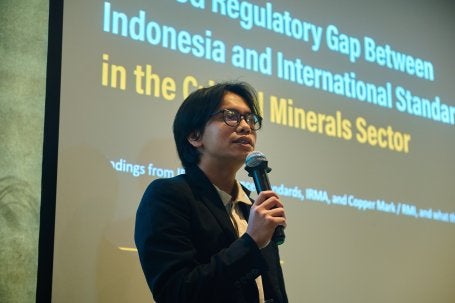
In the closing speech of the workshop, David Purba, WRI Indonesia’s critical mineral analyst, concluded, “The compliance with the ESG standards needs to be realistically assessed for industries. The workshop will give a preliminary tool for industries to be closely aligned with the international standards.”
Moving forward, practical guidelines calibrated to the Indonesian context can help companies to leverage a smart ESG strategy. By layering international best practices on top of the national regulatory framework they already follow, businesses can eliminate duplicate compliance work, secure access to global markets, and turn ESG compliance from a burden into a major competitive advantage.