Featured WRI Experts:
Explore more:
cities


Stories from Barrang Lompo show that sustainable mobility must be achieved in parallel with justice and inclusivity.

The mobility of Barrang Lompo Island residents is highly dependent on ship schedules, weather, and sea tides, so access to basic services such as health, education, and employment is often hampered.
Vulnerable groups such as fishermen, women, people with disabilities, and low-income households face higher risks and mobility limitations due to the lack of safe, affordable, and inclusive transportation services.
Decarbonization of transportation must prioritize the real needs of island residents by providing a maritime mobility system that is more accessible and fair and supporting social protection.
This article is part of the Pojok Belajar Rakyat Kota untuk Inisiatif Inklusif Rendah Emisi (PARKIR) Makassar program, a collaborative research and knowledge archiving initiative involving women, people with disabilities, urban village residents, and young people to identify challenges and opportunities for inclusive and low-carbon mobility. PARKIR is supported by the UK Government through UK PACT (UK Partnering for Accelerated Climate Transitions).
***
“If the tide is low, the boat can't sail."
While the sentence sounds simple, the tides shape almost every aspect of daily life for the people of Barrang Lompo Island. These coastal patterns dictate whether someone can travel to Makassar for medical treatment, whether students reach classes on time, or whether residents can address urgent needs immediately.
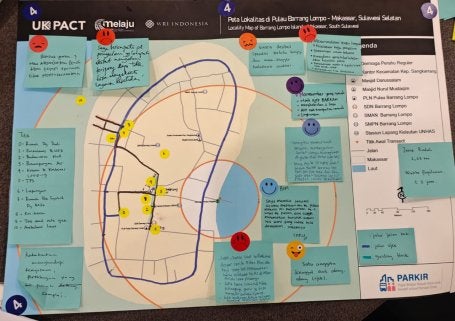
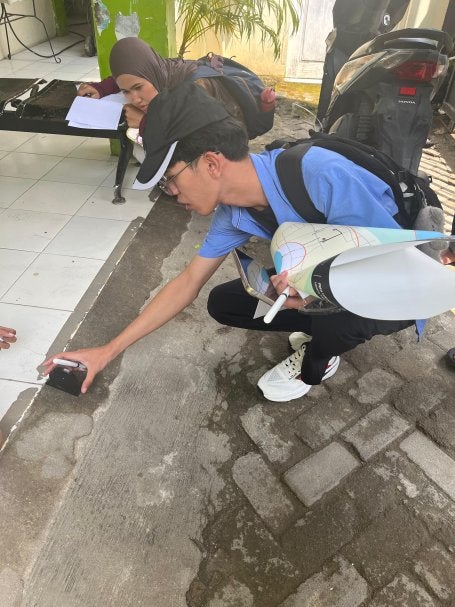
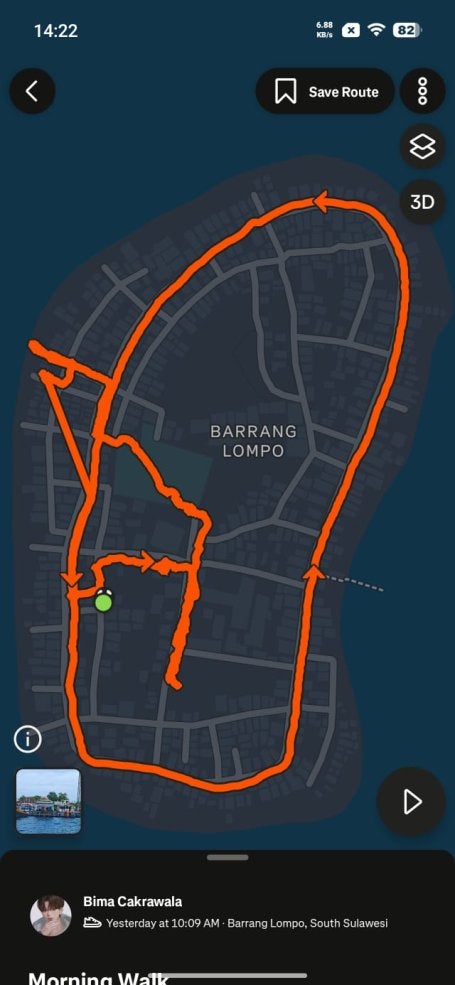
On Thursday morning (April 23, 2026), low tide delayed the writing team's journey to Barrang Lompo by almost an hour. We crossed the water as a part of the Pojok Belajar Rakyat Kota untuk Inisiatif Inklusif Rendah Emisi (PARKIR) Jakarta program. PARKIR is implemented by WRI Indonesia with support from UK PACT (Partnering for Accelerated Climate Transitions), a flagship programme under the UK Government's International Climate Finance (ICF). In Barrang Lompo, the team conducted a transect walk to understand the islanders’ daily mobility—not just as a matter of transportation but also of access, safety, and social justice.
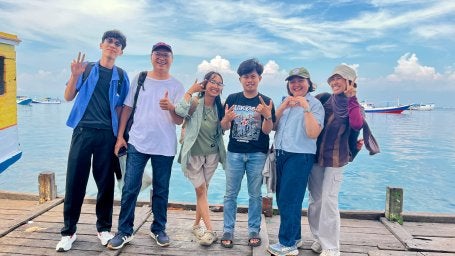
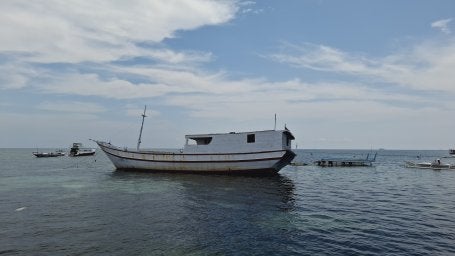
On the map, Barrang Lompo Island, part of the Sangkarrang Islands District, sits only about 13 kilometers from the mainland of Makassar City. However, geographical proximity does not necessarily translate into accessibility. Passenger boats take 50-60 minutes to reach the island. Ships to Makassar depart only at 7 a.m. On the other hand, the return route from Makassar to Barrang Lompo operates at 10 and 11 a.m. After that, no more public passenger ships operated. Residents can rent a boat specifically for a same-day return trip, but the cost can reach around IDR 2 million. As a result, the community’s mobility depends heavily on boat schedules, weather, and sea tides.
Through the GEDSI approach, PARKIR seeks to hear the voices of groups that are rarely visible in transportation planning: women, people with disabilities, village residents, island communities, and traditional fishermen. This approach aligns with the spirit of the Minister of Transportation Decree Number 8 of 2023 concerning Climate Change Mitigation Actions in the Transportation Sector, which emphasizes the development of public transportation, pedestrian facilities, transportation integration, and increased accessibility to support low-emission mobility.
A man about 170 cm tall walked unsteadily from the direction of Persebar Field along a narrow alley on Barrang Lompo Island. The alleyway between the houses features paving blocks and spans no more than 1.5 meters wide.
The man, Syahril Daeng Mile, 36, traveled toward his house near the new pier. He wore a blue polo shirt, knee-length black shorts, and a white hat. A blue sock covered his left foot, while a red-black-yellow sock covered his right. His steps looked heavy and stiff. He walked while slightly dragging his feet. His calves were coated in black ash. We interviewed Daeng Mile about his activities as a fisherman searching for sea cucumbers (pataripang) while sitting on the wooden platforms beneath his traditional Makassar-style house (siring balla).
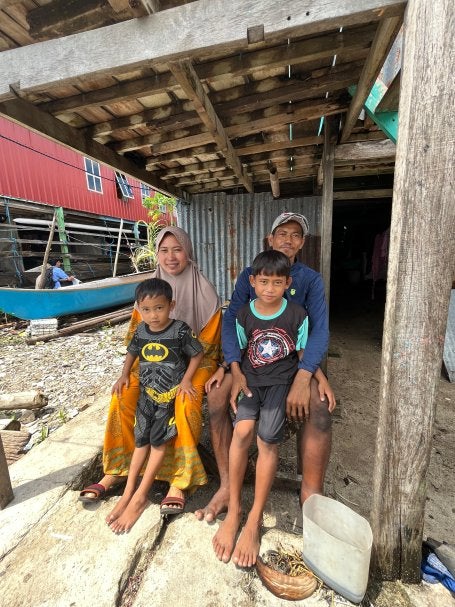
As a pataripang, Daeng Mile spends approximately a month at sea. Alongside 19 fishermen on his team, he fishes sea cucumbers in the waters of Kalimantan and the Java Sea, including areas around Karamian Island in Sumenep District, East Java.
Usually, he dives for long-nosed sea cucumbers (Holothuria scabra). During certain months, the catch reaches 1 ton. Premium species such as long-spined sea cucumbers command prices of up to IDR 500,000 per kilogram. The crew shares the catch among 19 people—including the ship's helmsman, fishermen, and those waiting on board (pajama rate)—while also paying rent to the ship owner and covering operational costs. Through his work as a sea cucumber fisherman, Daeng Mile supports his family and purchased a motorcycle.
A pataripang spends months at sea. They dive to a depth of 20 meters using basic equipment: a hose, a compressor, diving goggles, and a homemade regulator. Changing currents or compressor damage puts the diver at risk of paralysis or even death.
For the Barrang Lompo community, the sea functions as both an economic opportunity and a risk. If paralysis forces them to stay home, the pataripang lacks social protection. The community health center provides no health insurance, life insurance, or rehabilitation facilities. When their bodies cannot dive, the income stops too. Daeng Mile shared the story of his leg injury and paralysis. The treatment is relatively simple. He smeared his feet with the ashes of burnt rice straw, called laklara in Makassarese, making them look black. Local people believe that practicing laklara and continuing to move actively can overcome leg paralysis.
Daeng Mile has a pregnant wife, Narti Daeng Tikno, who is 28 years old, and two children still in elementary school. His 82-year-old grandmother, Daeng Baji, also lives with them. Consequently, despite an incomplete recovery, he prepares to return to sea. He learned to walk by pushing a cart to train his leg muscles. His wife encourages him continuously and asks him to move his legs regularly.
The story of Daeng Mile, who insists on returning to the sea, differs from those of 50-year-old Daeng Misi and 46-year-old Basri, who can no longer sail long distances. These two neighbors experience difficulty standing due to paralysis. Daeng Misi now lives alone. Daeng Basri is now akdoang-doang—a term for squid fishers in the sea. “The catch is only enough for my own consumption; if there is any excess, then I sell it," Basri explained.
We also heard the story of Saddang, a 30-year-old fisherman found dead at sea after falling from a boat. Now, his wife raises two children alone.
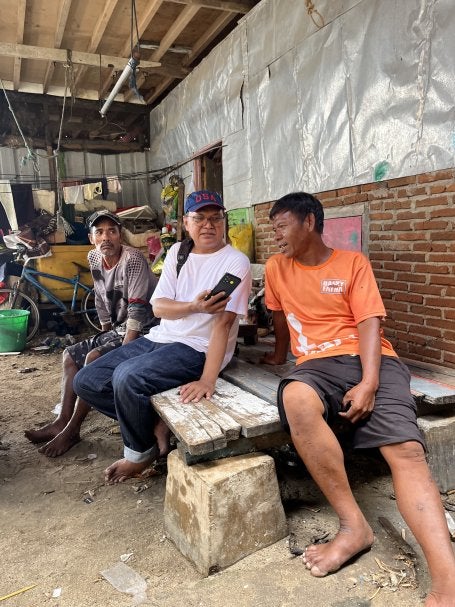
During the transect walk, we visited several public facilities, such as community health centers, schools, mosques, Reduce Reuse-Recycle Waste Processing Facilities (TPS3R), Sea Ambulance and Motor Ambulance facilities.
Limited human resources and high fuel costs prevent the Marine Ambulance from functioning optimally. In emergencies requiring transport to Makassar, residents often have to charter a jolloro boat as an emergency ambulance. Physically, some facilities exist; however, accessibility remains inadequate. For example, the ramp is still too steep for wheelchair users. Damage and dirt cover most guiding blocks for the blind. In other words, the existence of inclusive infrastructure does not necessarily guarantee equal access.
In many cases, people eventually adapt to limitations. They grow used to walking long distances, waiting for boats, or using unsafe facilities. Vulnerable groups often feel “forced” to adapt to transportation systems not designed for them. “Everything appears to work—not because the system is ideal, but because people have become accustomed to it and can no longer imagine an alternative,” said Elmita—a writing team member with a psychosocial disability—while reflecting on her experience.
Most transportation discussions in Indonesia still focus on roads and land transportation. However, for island communities like Barrang Lompo, the primary mode of mobility is at sea.
Residents depend heavily on ferry boats for work, school, medical treatment, and daily needs. When bad weather occurs or the sea water recedes, mobility practically stops.
The challenges for women often remain more complex. Many mothers must travel to Makassar to buy food and other household supplies. High sea transportation costs force some families to borrow from shops.
Low-income groups have much less mobility options than those who can afford private boat charters.
Students and college students also encounter major challenges. Many of them stay in Makassar to access further education because limited ship schedules make daily round-trip nearly impossible.
In discussions with residents, a proposal emerged to provide dormitories for students from Barrang Lompo to help reduce living costs in the city.
Barrang Lompo demonstrates that transport decarbonization cannot be treated merely as a technocratic exercise focused on reducing emissions. Low-emission transportation policies must address the community's real needs for a safe, affordable, and dignified mobility system.
Resident mobility in Barrang Lompo involves more than moving between locations; it includes access to health services, education, employment, and social protection. Safe and affordable maritime transport, accessibility for people with disabilities, and social protection for fishermen must form a key part of the conversation about sustainable transport.
Through PARKIR, residents become knowledge producers. Their stories and experiences show that gender, disability, economic status, age, and geographic location heavily influence everyday mobility.
Residents also hope the Makassar City Government soon realizes the plan to introduce "Pete-Pete Laut" to make crossings more frequent and affordable. Meanwhile, the pataripang hope for boat assistance to end their dependence on the boss. “If each fisherman were given assistance in the form of lepa-lepa (boat), it would be even better," said Basri.
Fishermen also recognize the importance of forming communities or cooperatives to help them obtain better work safety systems.
Stories from Barrang Lompo serve as a reminder that low-emission transportation remains exclusionary if people must still risk their bodies, time, and lives to travel and access basic services.
Decarbonizing transportation must start by listening to the experiences of residents on the fringes of policy discussions. For island communities, mobility is more than simply getting from one place to another—it is about dignity, opportunity, and survival.(*)