

Explore more:
cities
Electric Bikes Shape Everyday Life on Barrang Lompo Island: Social Trends Meet Lasting Mobility Challenges
Electric bikes in Barrang Lompo Island offer convenience along with new challenges related to safety, energy, environment, and social spaces that need to be managed sustainably in the long run.

Image by
Memora untuk WRI Indonesia
Key Takeaways
-
Electric bikes provide easy mobility in Barrang Lompo, but also heighten safety risks, especially for children.
-
The surge in electric bike usage adds to the electricity burden on the island, which still relies on fossil fuel generators.
-
The use of electric bikes on small islands requires regulation, education, and energy management to remain safe and sustainable.
This article is part of the Pojok Belajar Rakyat Kota untuk Inisiatif Inklusif Rendah Emisi (PARKIR) Makassar program, a collaborative research and knowledge archiving initiative involving women, people with disabilities, urban village residents, and young people to identify challenges and opportunities for inclusive and low-carbon mobility. PARKIR is supported by the UK Government through UK PACT (UK Partnering for Accelerated Climate Transitions).
***
At 11:15 AM on Barrang Lompo Island, the sun sits almost directly overhead. Harsh white light reflects off zinc roofs and tightly packed wooden planks of stilt houses, pressing heat against the skin from all directions. The sea breeze blows occasionally, bringing a faint salty scent without providing any cooling.
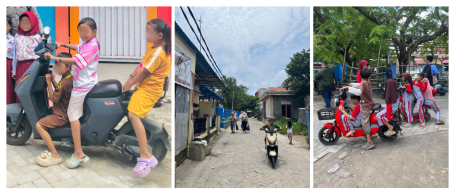
A soft buzzing sound emerges from the end of a narrow alley flanked by wooden houses. An electric bike passes quietly. Three girls in pink, yellow, and brown clothes ride a small gray electric bike. They squint against the sun's glare while their bodies sway with the motion of a vehicle they have not yet mastered.
They enter a narrow bend without reducing speed. The girl steering grips the handlebars stiffly, while her two passengers look unsteady. The small tires scrape the road surface, raising a thin layer of dust that almost touches the feet of a resident walking with her back to the group. The pedestrian reflexively steps back, and the bucket she carries swings as she pulls it away from the road. The gray bike continues silently at full throttle. Had another type of vehicle been involved, this incident could be treated as a hit-and-run case. However, the pedestrian appears unbothered and keeps walking.
From Ease to Risk
This phenomenon is more than an isolated incident. Residents of Barrang Lompo are now familiar with electric bikes. RT 4 RW 1 alone has 18 electric bikes in active use, which indicates that residents commonly use them. However, the concern involves not only the number of electric bikes, but also how they are used. Children, even very young ones, race through the alleys, overtake each other, and ride without adequate supervision.
Kredit foto: Mutiara Kurniasari/WRI Indonesia, Stella Hutagalung/WRI Indonesia
Dahlia (33 years old) says her family bought an electric bike in Makassar almost a year ago for approximately IDR 3.5 million in cash at her daughter’s (Kirani, 14 years old) request. Since then, Kirani has used the vehicle to go to school, help her mother buy household necessities, and travel around the island with friends. She learned to ride the electric bike from her father at age 13. For Kirani, the electric bike also plays a role in her daily social interactions with friends.
However, like many other changes on the island, this convenience pairs with a rising sense of anxiety. Dahlia admits she often fears her daughter will bump into something when passing through narrow, crowded corridors. This concern has merit: Kirani admits she has fallen while using an electric bike. Another problem arises when the charging process stops because the island sometimes experiences a blackout before the battery fully charges. Their electric bikes also broke down, though family members repaired them on the island at no extra cost. According to Dahlia, more schoolchildren around the house and in the alleys now use similar vehicles.
At this point, the problem becomes apparent. Electric bikes offer convenience and provide a practical transportation solution on small islands. However, without sufficient rules and awareness, convenience turns into a source of risk. The problem involves usage rather than technology on an island where electricity remains limited.
The Problematic Layers of Electric Bikes
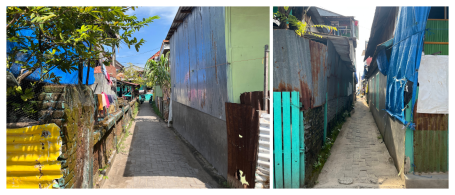
First, safety aspects present the most visible risk. Various activities take place in the narrow streets of Barrang Lompo. Children under 12 operate these vehicles, and observations show they do so even without parental supervision. On narrow, shared village roads, the combination of speed and minimal safety equipment increases the risk of accidents.
Kredit foto: Mutiara Kurniasari/WRI Indonesia
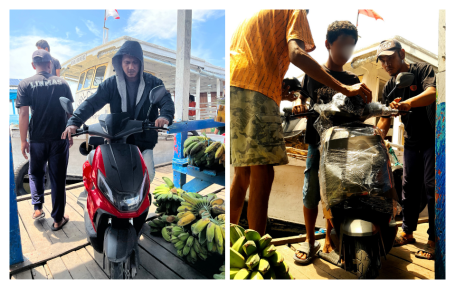
Second, the island's energy system faces increasing pressure. Residents still experience limited access to electricity, which PLN or generators generally provide only from 5:00 PM to 6:00 AM. Electric bikes require stable and longer-term charging. As the number of users grows and many homes charge devices simultaneously, the electricity load increases drastically during the afternoon and evening. Field findings show that generators on the island have experienced several breakdowns due to overcapacity since the number of electric bikes began to increase in Barrang Lompo. Currently, the generator capacity in Barrang Lompo Village is approximately 250 kW, while the electricity required for the system to operate safely is estimated at 500 kW.
Residents feel the impact immediately in everyday island life. Lights dim, fans slow down, and ice cubes do not “freeze” as quickly as before. As one resident said, “Now all the kids want to use it, but we don’t have enough electricity.” This situation also demonstrates that additional energy consumption on small islands carries direct consequences for the community's quality of life.
This condition exposes contradictions in environmental-friendliness claims. Advocates often claim that electric bikes provide a low-emission mode of transportation. However, on small islands, the electricity source still depends on fossil fuels (diesel generators). This means that emissions do not disappear; they simply shift from the vehicle to the power source. At this point, electric bikes do not offer an environmental solution if the energy system remains unchanged.
Kredit foto: Mutiara Kurniasari/WRI Indonesia, Nur Asyifah/PARKIR Makassar
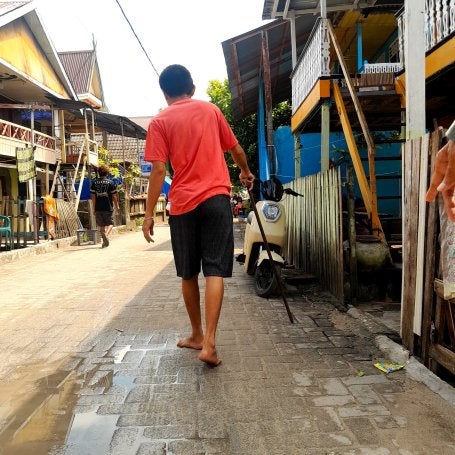
Social dynamics also change. In recent months, electric bikes have transformed from a luxury item into a social necessity, especially for elementary school-aged children. Ownership of electric bikes creates a divide between those who have one and those who do not. In addition, the limited public space on this densely populated island faces increasing pressure. Seniors and people with disabilities face greater risks in increasingly cramped and less safe public spaces. Without regulation, these changes could reinforce existing exclusions.
Kredit foto: Nur Asyifah/PARKIR Makassar
In addition, other problems emerge from the short lifespan of electric bikes. Electric bikes that no longer work properly appear in various corners of yards. Bent wheels and rusted frames from exposure to seaside air do not always receive repairs due to a lack of facilities on the island. A common problem is that the battery slowly weakens with use, and replacement costs remain high.
Daeng Dadi, a resident of Barrang Lompo, says he bought an electric bike for IDR 5 million by taking a loan. After about three years of use, the battery started to fail. However, battery replacement is costly for him. One battery costs around IDR 400,000, while an electric bike generally requires three to four batteries at once. As a result, residents leave weakened or damaged batteries unmanaged, creating potential electronic waste that can pollute the environment over the long term.
In terms of regulations, the Minister of Transportation Regulation No. 45 of 2020 governs the use of electric bikes, including safety and designated routes. However, implementing this regulation on Barrang Lompo Island faces challenges due to limited supervision and limited dissemination.
Managing, Not Just Adopting
An integrated solution can address these problems. One key step is to create local regulations governing the ownership and use of electric bikes, including age limits, parental supervision requirements, and designated usage zones. Children need to be accompanied; parents must not allow them to use electric bikes without control.
Public education, especially targeting children and parents, ensures that residents view electric bikes as a responsibility rather than just a convenience. Schools, communities, and local activities must gradually build awareness regarding safety, the use of shared road spaces, and the risks of electric bike use at an early age.
In addition, policy advocacy can keep island children’s needs on the agenda. Providing safe, shady, and comfortable walking paths remains important to ensure that children's mobility does not depend entirely on electric vehicles. Public space planning must ensure that mobility remains safe and inclusive for children, the elderly, and people with disabilities.
In the long term, structured energy management schemes, including additional contributions for electric vehicle use, must address current challenges. Alternatives such as limiting charging times, implementing shared charging systems, or using renewable energy can reduce dependence on generators. In the context of a small island like Barrang Lompo, technology remains tied to existing energy and infrastructure conditions. Electric bikes are truly environmentally friendly only when a clean and equitable energy system powers them.
On a broader policy level, the Makassar City Government must incorporate the transportation decarbonization mandate into planning documents, such as the Makassar City Long Term Development Plan (RPJPD), Makassar City Medium Term Development Plan (RPJMD), and Makassar City Strategic Plan (Renstra). This integration ensures that the development of sustainable mobility becomes part of a directed and systematic vision. Policies should include incentives for low-emission vehicles, the strengthening of clean energy, and regulations that adapt to the conditions of the island.
Ultimately, amidst the recurrent heat and the salty sea breeze, electric bikes will likely continue to pass through the alleys of Barrang Lompo. The question is no longer whether electric bikes will become part of island life, but instead how the community and government choose to manage them.