Explore more:
sustainable business
Press Release
ESG Gap Analysis Reveals Indonesia Meets Only Half of Global ESG Standards for the Critical Minerals Sector
Key Takeaways
-
Indonesia’s ESG regulatory framework aligns with only 39–51% of the three leading international ESG standards.
-
Up to 96% of identified regulatory gaps are concentrated in the Social pillar, including Indigenous Peoples’ rights and land governance.
-
The study recommends strengthening regulations and enhancing cross-sector coordination to improve the global competitiveness of Indonesia’s critical minerals industry.
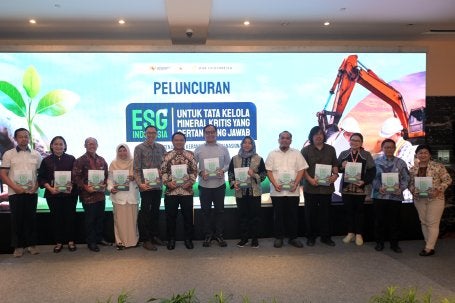
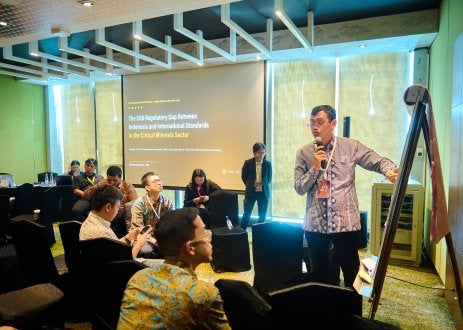
Jakarta, 23 June 2026 – The Coordinating Ministry for Economic Affairs, together with the National Economic Council (DEN) and World Resources Institute (WRI) Indonesia, today released a study assessing how Indonesia's regulatory framework for critical minerals measures up against international Environmental, Social, and Governance (ESG) standards.
The report was designed as a diagnostic tool to benchmark Indonesia’s regulatory framework against three internationally recognized standards: the International Finance Corporation Performance Standards (IFC PS), the Initiative for Responsible Mining Assurance (IRMA), and the Copper Mark/Responsible Minerals Initiative (Copper Mark/RMI). The assessment evaluates the extent to which Indonesia’s legal framework incorporates ESG principles using these standards as international benchmarks.
The report assesses the alignment of 117 Indonesian regulations against three internationally recognized ESG frameworks. The findings indicate that Indonesia’s current ESG regulatory alignment ranges from 39% to 51%, with regulatory gaps in the Social (S) pillar reaching 96%. The study highlights the need to strengthen regulation to better align with international ESG requirements and support the sustainable development of Indonesia’s critical minerals sector.
The analysis identified 103 compliance deliverables that overlap between Indonesia’s national regulations and international ESG standards. However, 45% of regulatory provisions were found to be only partially aligned and require further implementation guidance, while 23% of required compliance elements are not addressed by existing regulations. Notably, 96% of these regulatory gaps fall within the Social pillar, covering critical issues such as protection mechanisms for Indigenous Peoples, including commitments to Free, Prior and Informed Consent (FPIC), land acquisition processes, and community resettlement.
The findings suggest that while Indonesia already has a broad ESG regulatory foundation across multiple sectors, the existing framework remains fragmented and often lacks the operational and technical requirements to meet international ESG assurance and audit expectations. The study reviewed 117 regulations, including 21 laws (Undang-undang), 20 government regulations (Peraturan Pemerintah), and 50 ministerial regulations (Peraturan/Keputusan Menteri) directly related to ESG governance in the critical minerals sector.
Agus Wibowo, Assistant Deputy for Mining Industry Downstream Development at the Coordinating Ministry for Economic Affairs, stated, “Strengthening ESG performance is essential to meet growing global expectations for responsibly and sustainably produced critical minerals. This study provides a practical basis for the government to improve existing regulations and develop new policies that are aligned with international ESG standards. Ultimately, we hope this effort will improve the consistency and alignment of Indonesia’s regulatory framework with global ESG requirements.”
Tubagus Nugraha, Executive Director for Policy Synchronization of Priority Economic Programs at the National Economic Council (DEN), said, “This study reinforces the fact that ESG cannot be viewed through a single lens. ESG-related requirements span multiple sectors and policy areas. A greater understanding of internationally recognized standards is critical for both government and industry stakeholders. We hope this assessment will foster greater awareness while supporting regulatory transformation and harmonization with global ESG frameworks.”
Of the 42 comprehensive ESG parameters assessed—including wastewater management, biodiversity conservation, Indigenous Peoples’ rights, occupational health and safety, supply chain transparency, and anti-corruption measures—40 were found to contain operational and technical gaps requiring further regulatory enhancement.
The study presents three strategic recommendations:
- For the Government of Indonesia, it recommends advancing ESG regulatory transformation by developing national ESG compliance guidelines and establishing a cross-sector coordinating institution.
- For international standard-setting organizations, the report recommends adopting equivalency recognition mechanisms that allow official Indonesian legal and regulatory documents to be recognized directly within ESG assurance processes, thereby reducing due diligence and audit costs.
- For industry stakeholders, the report emphasizes the importance of developing integrated compliance registers and strengthening internal ESG functions to ensure that sustainability implementation is systematic and proactive, rather than driven solely by audit requirements.
Nirarta Samadhi, Country Director of WRI Indonesia, stated, “Indonesia holds a strategic position due to its significant critical mineral reserves and processing capacity. However, this advantage can become a source of risk if governance systems are not strengthened comprehensively. Nickel downstreaming has become a key pillar of Indonesia’s development strategy. This ESG gap analysis facilitates identifying potential ‘hidden costs,’ including emissions and ecological impacts, that may affect the sector both today and in the future.”
The launch marks an important step in demonstrating Indonesia’s commitment to building a globally competitive critical minerals industry that meets international sustainability expectations. The report was developed through extensive collaboration among 12 ministries and 43 government directorates to formulate strategies to strengthen regulation, curb environmental and social risks in mining regions, and promote transparent governance practices that enhance the international competitiveness of Indonesia’s strategic mineral commodities.
Download the Report
Download the full report (in Bahasa): https://bit.ly/LaporanKesenjanganESG.
======================================================================
About the Coordinating Ministry for Economic Affairs – Deputy for Energy and Mineral Resources Coordination (Deputy IV)
The Deputy for Energy and Mineral Resources Coordination (Deputy IV) within the Coordinating Ministry for Economic Affairs is responsible for coordinating and synchronizing the formulation, implementation, and oversight of policies across ministries and government agencies related to national development priorities in the energy and mineral resources sectors.
For more information, visit the Coordinating Ministry for Economic Affairs – Deputy for Energy and Mineral Resources Coordination.
About the National Economic Council (DEN)
The National Economic Council (DEN) is mandated to provide strategic advice and policy recommendations to the President to accelerate the implementation of strategic economic policies and priority programs.
For more information, visit the National Economic Council.
About WRI Indonesia
WRI Indonesia, legally established as Yayasan Institut Sumber Daya Dunia, is an independent research organization dedicated to advancing inclusive and sustainable socio-economic development in Indonesia.
Our work focuses on five core areas: forests, climate, energy, cities and transportation, and oceans. We turn big ideas into action at the intersection of environmental sustainability, economic opportunity, and human well-being.
For more information, visit WRI Indonesia.
Media Contacts
David Purba, Critical Minerals Analyst, WRI Indonesia, [email protected]
Enggi Dewanti, Senior Communications Specialist, WRI Indonesia, [email protected]