Featured WRI Experts:
Lihat juga:
pangan



The World Interfaith Harmony Week in early February 2026 could be an important moment to reflect on interreligious harmony and cooperation. During these period, numerous faith traditions observe important milestones in their spiritual calendars. For instance, Christians observe Ash Wednesday, while Muslims begin Ramadan. This year, the timing is especially unique, with Nyepi and Eid al-Fitr falling in the same week and just a week away from the Easter day.
These overlapping observances remind us that religious life continues to influence how communities perceive responsibility, compassion, and care for the world. Amid the growing realities of climate crisis and social inequalities, this convergence invites deeper reflection on the importance of integrating faith and spiritual traditions in addressing fundamental challenges of life today.
One of the biggest global challenges today is to ensure sustainable nourishment for more than 8.3 billion people. Indonesia also faces similar questions about how food is produced, consumed, and valued, as its food systems face increasing pressure from environmental degradation and unequal access. While technical solutions and policy measures are essential, they alone have proven insufficient. A moral foundation is crucial to shape collective perspectives and behaviour toward sustainability. As one of the most religious countries in the world according to Pew Research Center, Indonesia holds a strong social foundation for such a values-based approach. Religion and faith in Indonesia are powerful social force that able to shape norms and daily practices.
Across many religions and belief systems in Indonesia, food is revered as a sacred trust and a spiritual symbol. Land, water, seeds, and harvests carry deep moral significance demanding responsible stewardship. The way people treat food reflects their relationship with God, nature, and fellow human beings. In numerous communities, food management remains closely linked to rituals rooted in on gratitude and restraint, stances that stand in contrast to modern food systems, which often treat nature as an object of limitless exploitation and food solely as a market commodity.
In Islam, the faith followed by the majority of Indonesians, the principle of halal has been deeply integrated into societal practices, supported by institutions such as the Halal Product Assurance Organizing Body (BPJPH) and national halal standards. Yet halal is inseparable from the concept of thayyib, meaning that food must be lawful not only in substance and acquisition but also wholesome, ethical, and free from excess or harm. The Qur’an condemns wastefulness as a denial of divine trust, a teaching that resonates strongly in Indonesia, where food waste is estimated at 115 to 184 kilograms per person per year.
In Christianity, both Protestant and Catholic teaching view food not merely as the product of human labor but as a gift from God and a sign of divine participation in human life. Biblical narratives remind humanity that misuse of creation carries moral consequences, while Pope Francis’ encyclical Laudato Si’ calls for an “ecological conversion” that transforms patterns of production and consumption to protect the Earth as a shared home. This includes the Pope’s strong message against wasting food which seen as equal to stealing from the poor.
Comparable ethical perspectives also appear in other traditions. Hindu teachings emphasize dharma, the duty to maintain harmony within the cosmic order, encouraging moderation and respect for natural resources, while food is regarded as amerta, the light of life. Accordingly, food is classified into three types based on its effects on the body and mind: sattvika, which is considered optimal and emphasizes balance and purity; rajasika, which stimulates emotions and desires and includes some animal products in moderate amounts; and tamasika, which is discouraged due to its negative impact on health and mental clarity.
Meanwhile in Buddhism, food is regarded as a blessing and a form of medicine that sustains the body, so spiritual practice can continue. Consumption is guided by mindfulness, simplicity, and gratitude, not only to the Creator but also to all those involved in bringing food to the table. The principle of ahimsa, or nonviolence toward all living beings, encourages environmentally friendly food practices that minimize exploitation and support balance between body and mind.
Similarly, in Confucianism, proper nourishment is viewed as essential for sustaining life and cultivating moral character. As discussed by Christensen (2017), this idea highlights the importance of material well-being as a foundation for moral cultivation. From this perspective, the food system from production to consumption should be guided by moral values. Economic and technological development may be pursued, but not at the expense of human well-being or ecological balance.
Beyond major religions, local beliefs and indigenous traditions across Indonesia preserve time-tested food wisdom. Practices such as safeguarding local seeds, respecting planting seasons, reflect an understanding that food sustainability depends on harmonious relationships between humans and nature. One example is the Sasi tradition in Maluku and parts of Papua, which temporarily prohibits the harvesting of marine and terrestrial resources to support conservation, protect ecosystem regeneration, and ensure fairer distribution once the restriction is lifted. In Pulau Ay village, Banda District, Central Maluku, this system has been formally enforced since 2014 with binding rules and fines for violations, helping safeguard marine biodiversity and coastal ecosystems.
Similarly, the Kasepuhan Gelar Alam community in Sirnaresmi, Sukabumi, follows the Sunda Wiwitan belief system, which emphasizes harmony between humans and nature. Farming, especially rice cultivation, is treated as a sacred practice guided by the philosophy of “mother earth and father sky”, encouraging people to live responsibly and maintain balance with the natural environment.
These wisdoms are often marginalized by uniform and market-oriented food systems, despite offering valuable insights in the face of climate crisis and food uncertainty. The role of belief-based communities is increasingly important in driving food system transformation. Places of worship can take role as centers for education on healthy diets, responsible consumption, and environmental care. Religious leaders hold strategic positions in framing food and climate crises as ethical and collective responsibilities rather than purely technical issues.
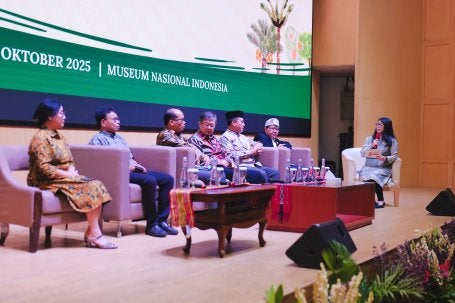
This potential is already visible in interfaith initiatives. December last year, more than 30 religious leaders, indigenous belief representatives, and faith-based organizations participated in a food systems workshop organized by the Koalisi Sistem Pangan Lestari (KSPL) and the KEHATI Foundation. The forum developed a shared action plan reflecting interfaith commitments to promote a just and sustainable national food system rooted in Indonesia’s spiritual values.
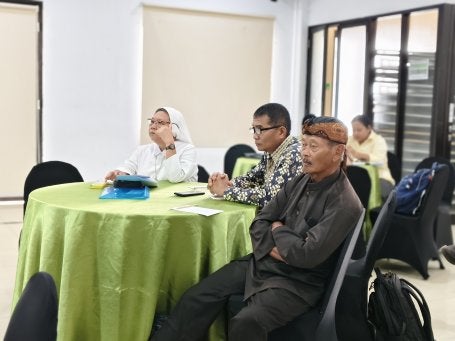
Ultimately, transforming food systems requires cross-sector collaboration, particularly with religious leaders and interfaith communities. Beyond the realm of science and public policy, faith-based actors can play a vital role in translating sustainability into everyday values and practices. The future of food systems depends not only on technology innovations and policy reforms, but also on the underlying values, beliefs, and moral responsibilities embedded within the society.
